

Contact us
Let’s Nurture helps insurers build scalable, secure, and AI-powered insurance operations designed for long-term growth.


AI Workflow Automation Development for InsuranceTech helps insurers reduce claims processing time, lower operational costs, improve underwriting accuracy, and deliver faster customer experiences through intelligent AI-driven automation systems.
AI Workflow Automation Development for InsuranceTech typically costs between $15,000 and $250,000 or more, depending on workflow complexity, AI capabilities, integrations, compliance requirements, and scalability needs. Small insurance agencies usually invest in basic automation systems, while enterprise insurers require advanced AI-powered workflow platforms with predictive analytics, fraud detection, and underwriting automation.
Customer expectations have changed dramatically over the last few years.
Policyholders now expect:
Traditional insurance systems struggle to meet those expectations.
AI automation solutions for insurers solve this problem by streamlining operations and improving response times across departments.
Accenture study revealed that insurers using AI-powered insurance operations reduced administrative expenses by an average of 30%. The same report showed that automated claims workflows improved customer satisfaction scores by nearly 45%.
The business impact is significant.
| Business Area | Average Improvement with AI |
|---|---|
| Claims Processing Speed | 50%–70% Faster |
| Fraud Detection Accuracy | Up to 80% Better |
| Operational Costs | 25%–35% Lower |
| Customer Response Times | 40%–60% Faster |
| Employee Productivity | 30% Increase |
These improvements explain why enterprise AI automation for insurance providers is growing rapidly in 2026.
One of the most searched questions today is: how much does AI workflow automation development for InsuranceTech cost?
The answer depends on several factors, including workflow complexity, AI capabilities, integrations, compliance needs, and scalability requirements.
Here is a realistic cost breakdown for modern InsuranceTech automation projects.
| Solution Type | Estimated Cost Range |
|---|---|
| Basic Automation Workflows | $15,000 – $40,000 |
| Mid-Level AI Workflow Systems | $40,000 – $120,000 |
| Enterprise AI Automation Platforms | $120,000 – $250,000+ |
Smaller insurance agencies often begin with simple insurance process automation development projects.
These may include:
These systems reduce repetitive administrative work without requiring complex AI models.
Mid-sized insurers typically invest in more advanced automation capabilities such as:
This level usually requires insurance AI integration services with CRMs, databases, and payment systems.
Large insurance companies often build custom AI workflow automation development for InsuranceTech environments designed for scalability and advanced decision-making.
These systems may include:
While enterprise systems require higher investments, they often deliver the strongest ROI over time.
Not every insurance workflow requires the same level of automation.
Automating a simple customer support process is very different from building a complete AI-powered insurance workflow management software development platform.
The more departments, approvals, and integrations involved, the higher the development cost.
Advanced AI features increase development costs but improve operational performance.
Popular features include:
Many insurers still operate on outdated systems built years ago.
Connecting modern AI-driven insurance workflow systems with older platforms often requires custom APIs and complex integration work.
This is one of the most overlooked expenses in insurance automation platform costs.
Insurance companies manage highly sensitive customer information.
Strong compliance systems are essential for:
Compliance requirements can significantly affect InsuranceTech automation development pricing, especially for enterprise-level insurers.
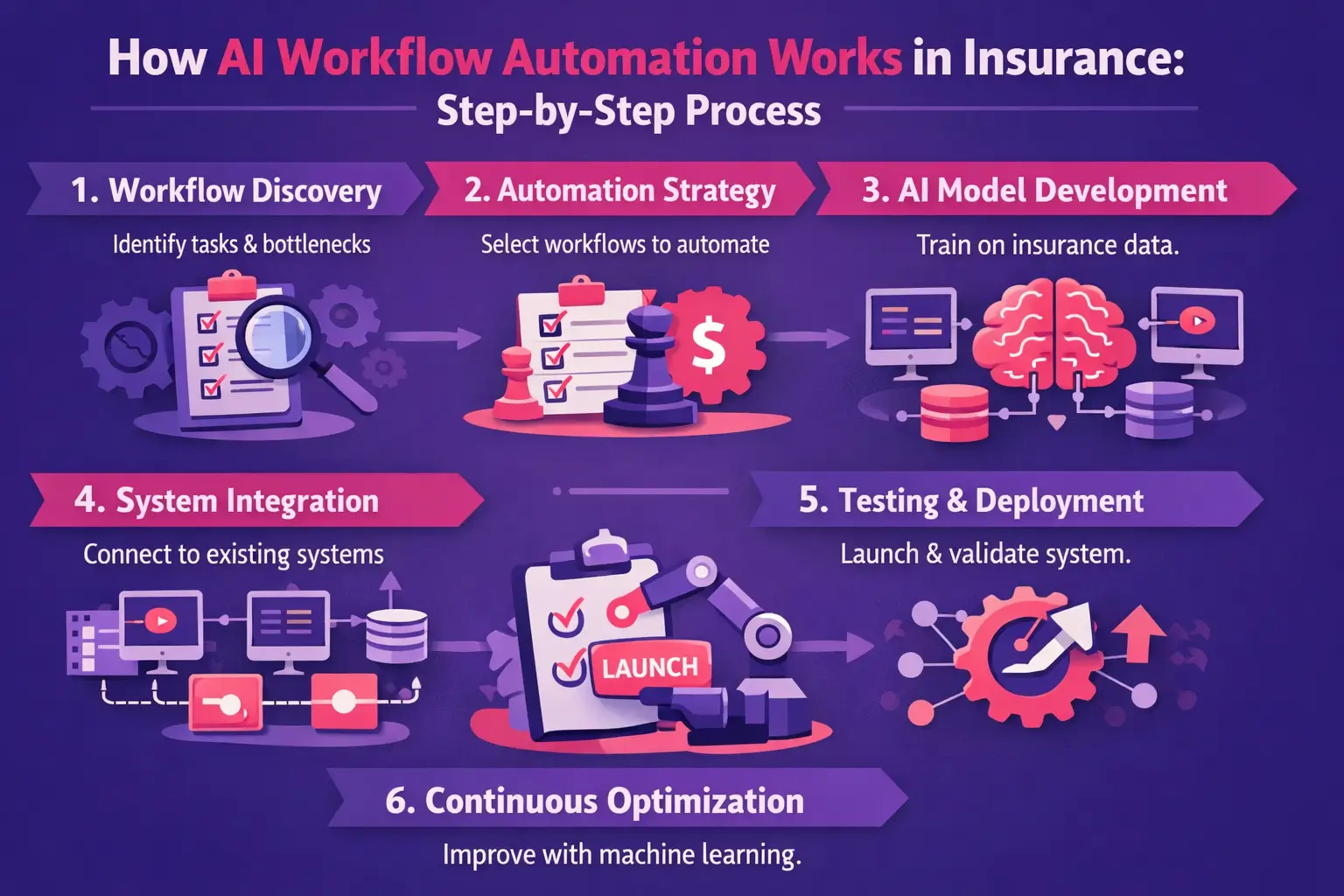
The development team studies existing insurance operations to identify repetitive tasks and bottlenecks.
Teams decide which workflows should be automated first based on cost savings and business impact.
AI models are trained using insurance data, workflows, customer behavior, and policy rules.
The automation platform connects with CRMs, underwriting systems, payment gateways, and internal databases.
After testing accuracy, security, and performance, the AI system goes live.
Machine learning allows the system to improve continuously over time.
A health insurance company handling over 20,000 claims monthly implemented AI claims processing automation to reduce delays.
Before automation:
After automation:
An insurance provider adopted insurance underwriting AI to automate risk assessments.
The results included:
A life insurance company introduced insurance chatbot automation for customer support.
The chatbot handled:
Within six months, support ticket volume dropped by nearly 40%
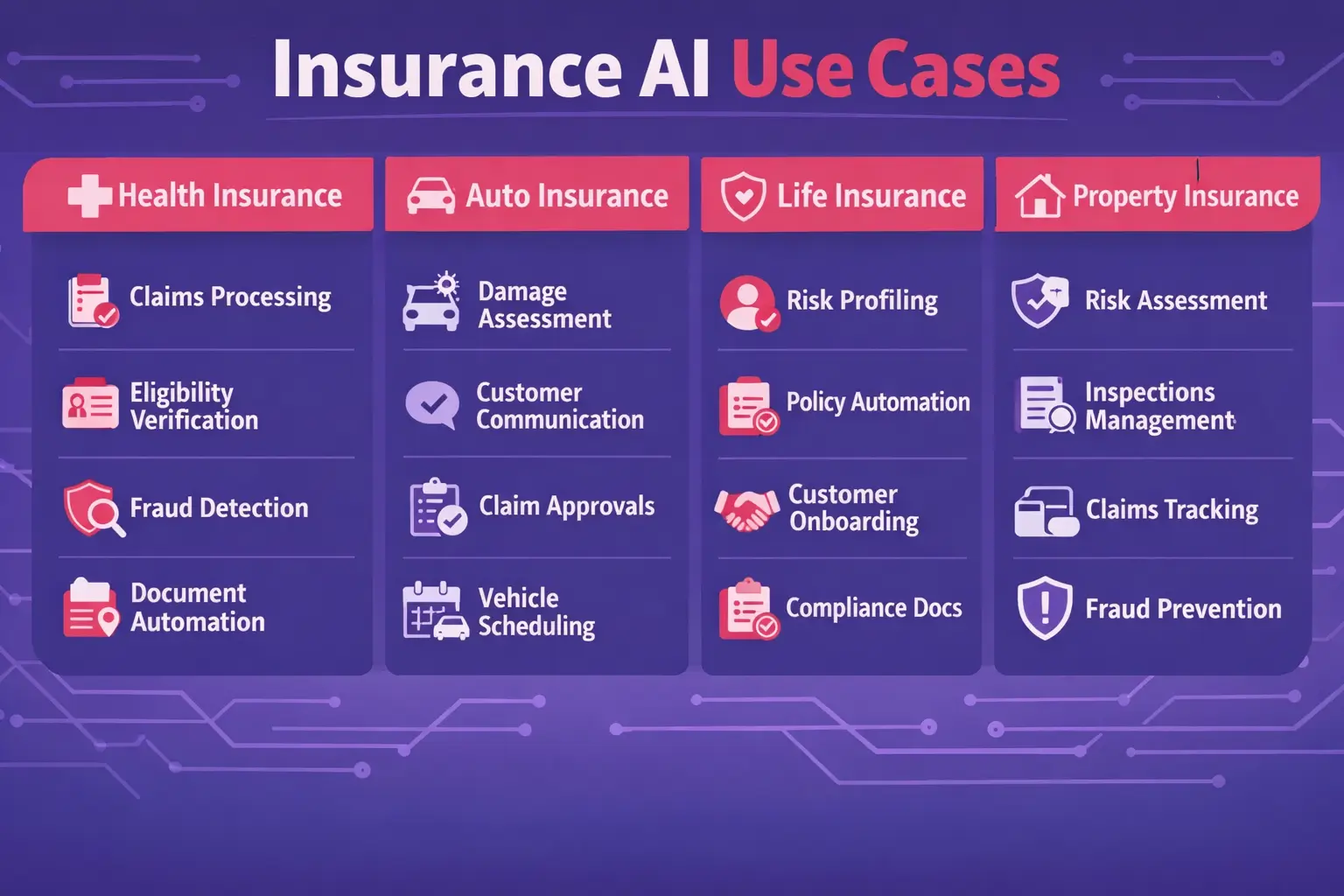
Health insurers use AI workflow automation for:
Auto insurance companies automate:
Life insurance providers rely on AI for:
Property insurers use AI-powered automation for:
Many insurers debate whether to choose ready-made platforms or build custom systems.
Here is a practical comparison.
| Feature | Custom AI Solution | Ready-Made Software |
|---|---|---|
| Workflow Flexibility | High | Limited |
| Integration Capability | Strong | Moderate |
| Scalability | Excellent | Restricted |
| Competitive Advantage | Strong | Limited |
| Long-Term ROI | Higher | Moderate |
| Initial Investment | Higher | Lower |
Custom systems are often the better choice for insurers with unique workflows and long-term growth plans.
Insurance companies investing in AI software development for insurance industry operations are seeing measurable returns.
A PwC insurance automation study found that insurers using intelligent automation improved operational efficiency by nearly 40% within the first two years.
AI automation solutions for insurers reduce repetitive administrative work and staffing costs.
Insurance claims automation tools speed up approvals and improve customer satisfaction.
AI reduces underwriting mistakes and document processing errors.
AI fraud detection systems identify suspicious activity more effectively than traditional manual reviews.
Faster communication and self-service tools improve customer trust and retention.
Many businesses underestimate the true cost of AI workflow automation for policy management systems.
Additional expenses may include:
Planning for these costs early prevents unexpected budget issues later.
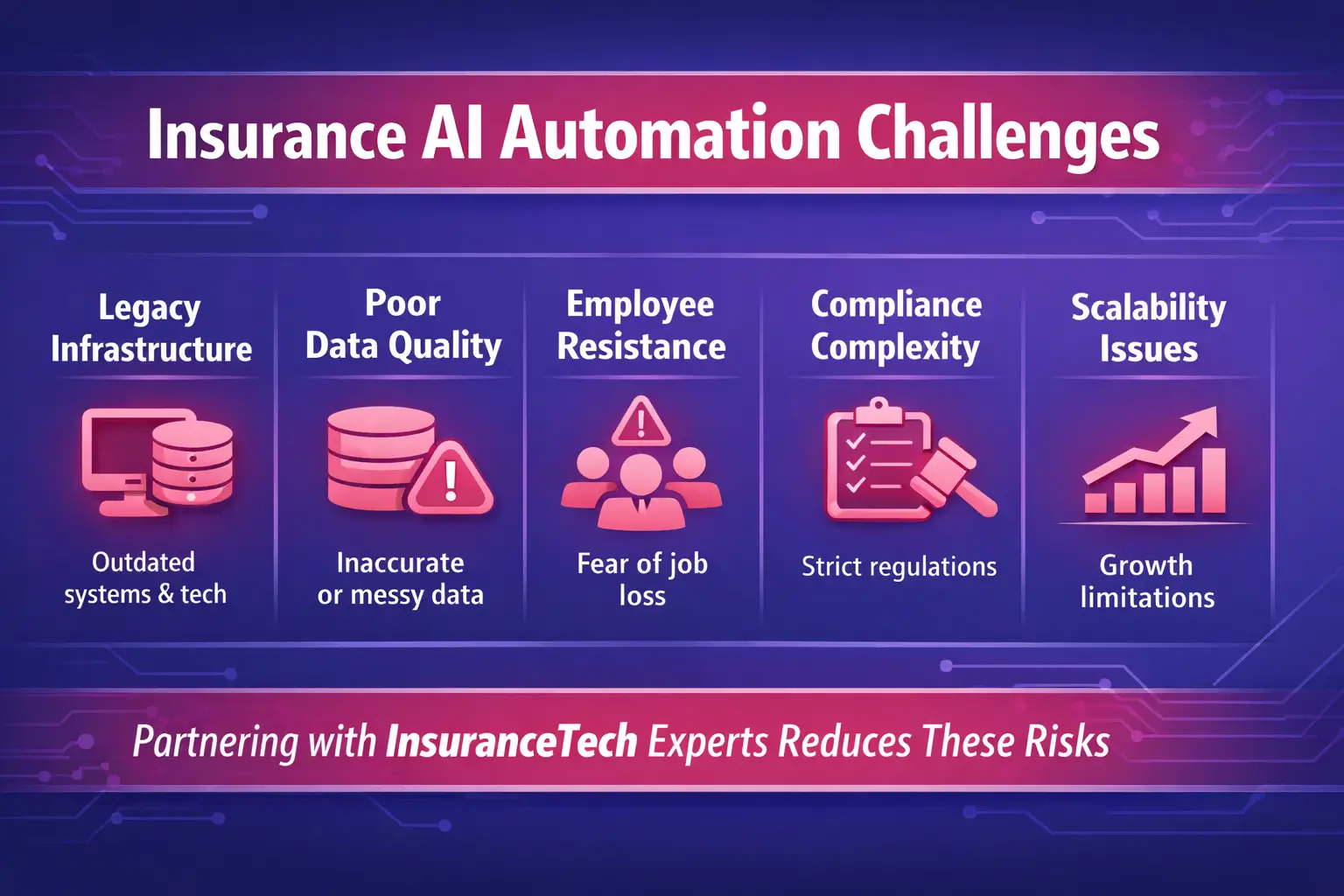
Older systems often lack flexibility for modern AI integrations.
AI systems depend on clean, structured data to operate accurately.
Some teams worry automation will replace manual jobs.
Insurance regulations vary by region and require careful implementation.
Poorly designed systems struggle to support growing policyholder volumes.
Working with an affordable InsuranceTech AI automation company with industry expertise helps reduce these risks.
Insurance automation is evolving quickly.
Emerging trends include:
Businesses that invest early will gain a strong competitive advantage.
AI Workflow Automation Development for InsuranceTech is reshaping how insurance companies handle claims, underwriting, customer service, fraud prevention, and policy management. What once required days of manual work can now happen within minutes through intelligent automation.
The investment required depends on workflow complexity, AI capabilities, integrations, and compliance requirements. While development costs vary, the long-term value is clear. Insurance companies using AI-driven insurance workflow systems are improving operational efficiency, reducing costs, and delivering faster customer experiences.
The insurance industry is moving toward fully connected, AI-powered ecosystems. Companies that delay automation risk falling behind competitors already using intelligent workflow automation for insurers.
Whether you need AI claims settlement automation, underwriting automation development, or policy management automation solutions, partnering with the right InsuranceTech development company matters.
Let’s Nurture helps insurers build scalable, secure, and AI-powered insurance operations designed for long-term growth.