

Contact us
If your company is ready to modernize with secure, scalable automation, now is the right time to partner with Let’s Nurture for AI Workflow Automation for InsuranceTech.


AI Workflow Automation for InsuranceTech helps insurers speed up claims, reduce costs, improve underwriting, and deliver faster customer service through smart, connected workflows that replace slow manual processes.
AI Workflow Automation for InsuranceTech is the use of artificial intelligence to automate insurance processes such as claims handling, underwriting, customer onboarding, renewals, document processing, and support. It helps insurers work faster, reduce errors, lower costs, and improve customer experience.

Insurance has always depended on process efficiency. But today’s environment is different:
That is why insurance workflow automation is no longer optional.
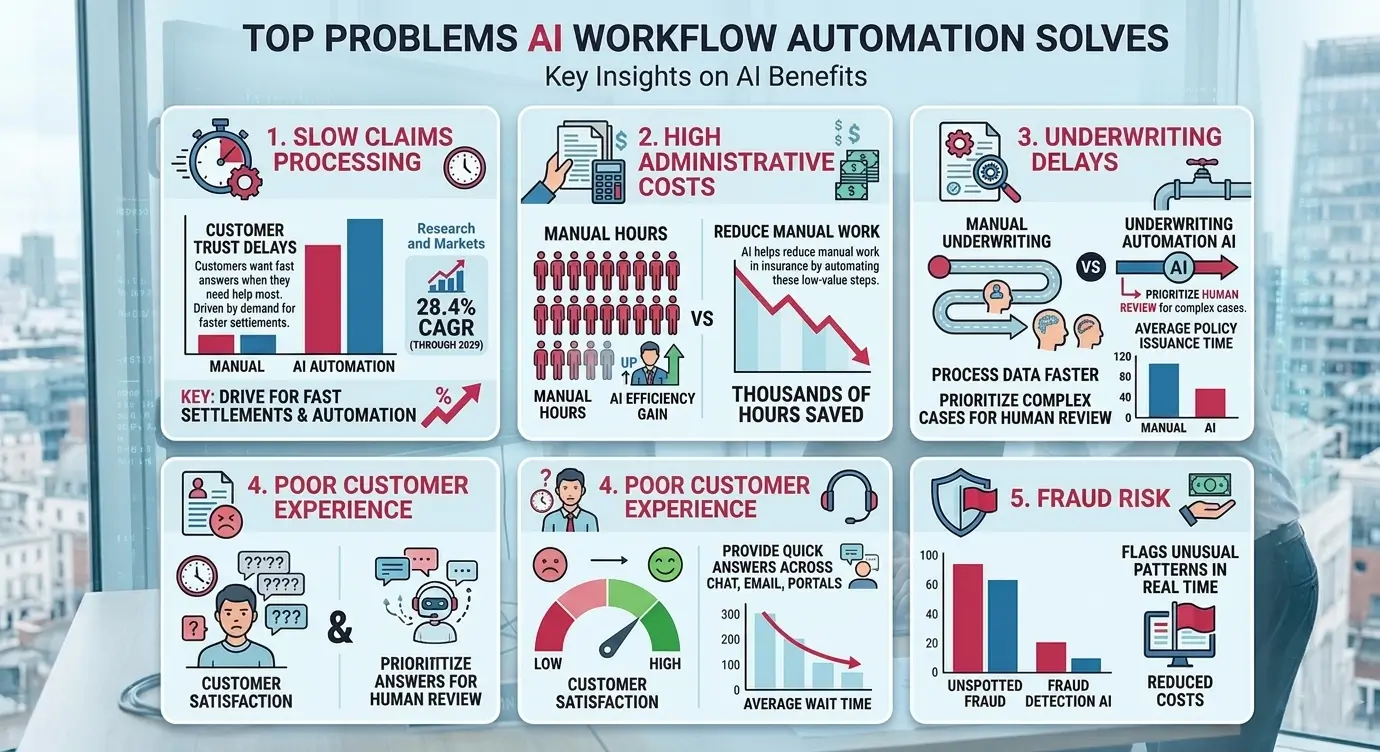
Claims delays hurt trust. Customers want fast answers when they need help most.
Research and Markets reports the AI in insurance claims processing market is growing at a 28.4% CAGR through 2029, driven by demand for faster settlements and automation.
Many insurers still spend thousands of staff hours on repetitive tasks such as data entry, follow-ups, and document review.
AI helps reduce manual work in insurance by automating these low-value steps.
Manual underwriting slows policy issuance. With underwriting automation AI, insurers can process structured data faster and prioritize complex cases for human review.
Long wait times, repeated questions, and unclear updates frustrate policyholders.
Insurance customer service automation helps provide quick answers across chat, email, and portals.
Suspicious claims can be costly and difficult to spot manually. Fraud detection AI flags unusual patterns in real time.
Automation speeds up intake, routing, verification, and approvals. Customers get updates sooner and settlements move faster.
Less manual handling means fewer delays, fewer errors, and leaner back-office operations.
Insurance data extraction AI reduces mistakes caused by manual typing or incomplete records.
AI can pre-screen applications, gather missing details, and help teams focus on high-value risk decisions.
Fast, simple service improves customer satisfaction and renewal rates.
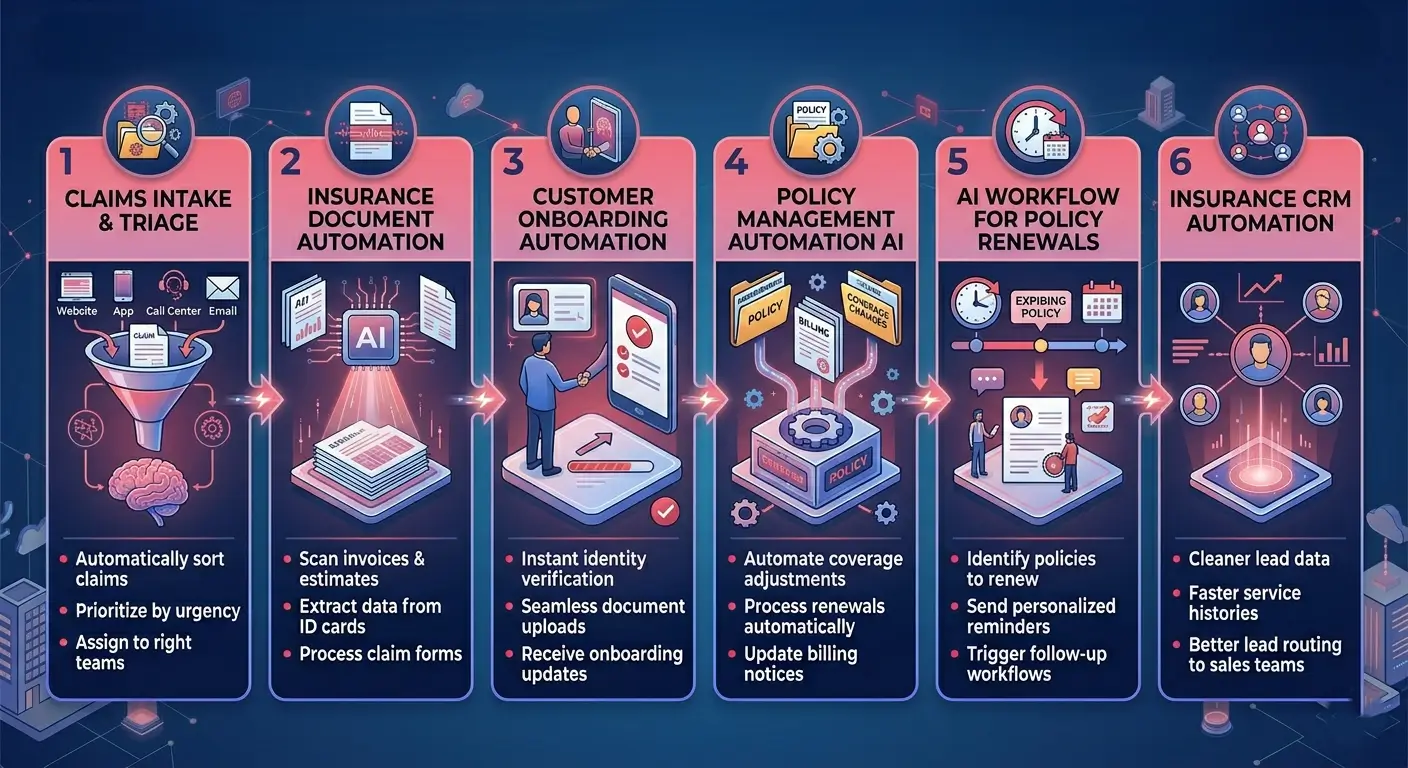
Claims from websites, mobile apps, call centers, or email can be sorted automatically by urgency and type.
AI reads invoices, repair estimates, ID cards, medical files, and claim forms. This supports intelligent document processing insurance workflows.
New policyholders can upload documents, verify identity, and receive onboarding updates without long delays.
Coverage changes, endorsements, billing notices, and renewals can run automatically.
AI can identify expiring policies, send reminders, and trigger follow-up actions based on customer behavior.
Sales and support teams gain cleaner data, better lead routing, and faster service histories.
Many decision-makers ask: How AI workflow automation helps insurance claims?
The answer is simple. It removes friction from every stage.
McKinsey shared an example where insurer Aviva used more than 80 AI models in claims, cutting liability assessment time for complex cases by 23 days and reducing complaints by 65%.
That shows what targeted automation can achieve.
Canadian insurers are under pressure to modernize customer experience while controlling costs.
This is driving digital transformation in insurance Canada, especially in cities such as Toronto, Vancouver, Montreal, Calgary, and Ottawa.
Many companies now want affordable AI workflow automation for insurers in Canada that works with existing systems instead of replacing everything at once.
Smaller agencies often feel they cannot compete with national brands. Automation changes that.
AI workflow automation for small insurance agencies helps lean teams do more with fewer resources.
Not every platform fits insurance needs.
The best AI workflow automation for InsuranceTech companies should solve real operational pain points, not just offer flashy features.
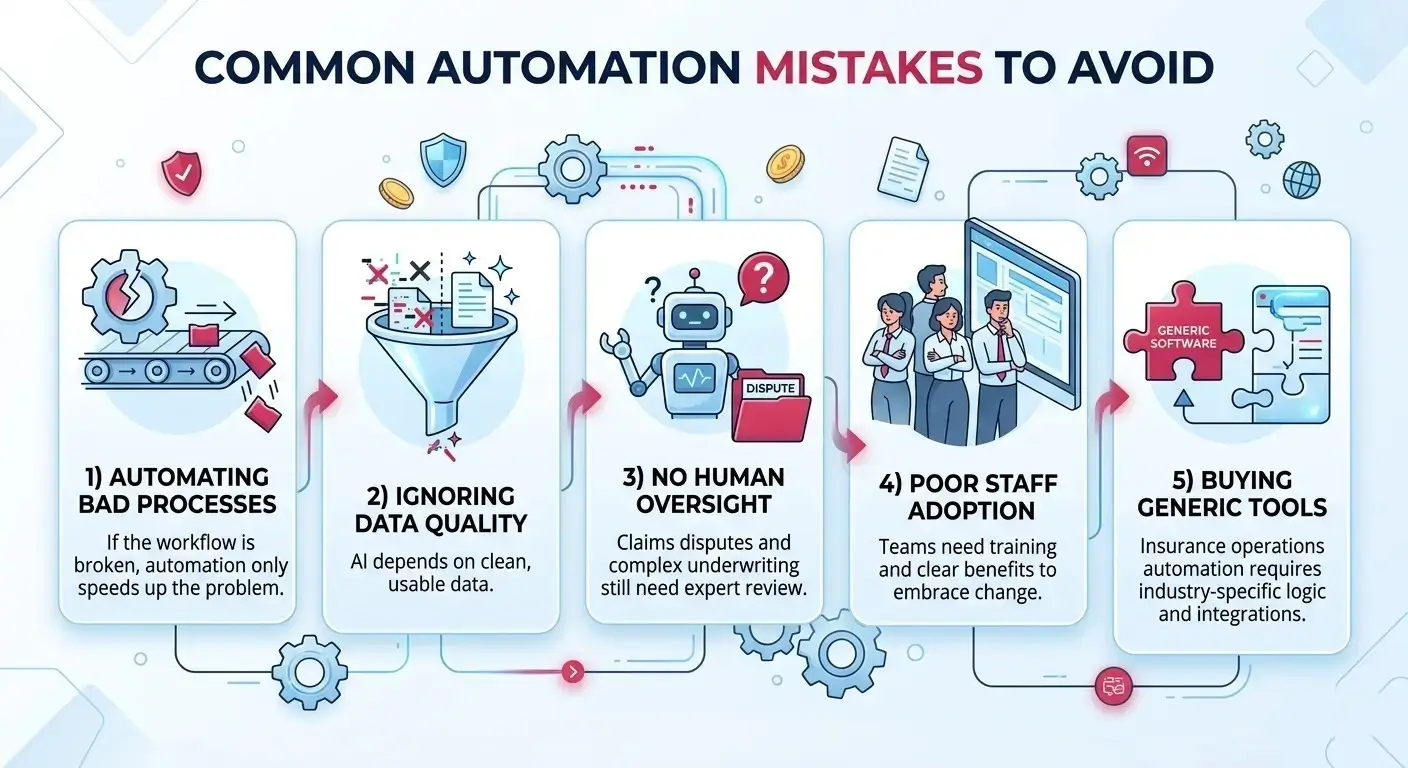
If the workflow is broken, automation only speeds up the problem.
AI depends on clean, usable data.
Claims disputes and complex underwriting still need expert review.
Teams need training and clear benefits to embrace change.
Insurance operations automation requires industry-specific logic and integrations.
AI may flag delays, escalation risk, or litigation probability early.
More real-time data will improve pricing and approvals.
Customers may receive better coverage suggestions based on life events and behavior.
Claims, policy, CRM, billing, and support systems will work as one seamless flow.
AI Workflow Automation for InsuranceTech is becoming a core growth strategy, not a future experiment. It helps insurers move claims faster, improve underwriting efficiency, lower costs, strengthen customer service, and manage risk with better accuracy.
The smartest path is to start small. Pick one high-impact workflow such as claims intake, renewals, or onboarding. Measure the gains. Then expand across the business.
Insurers that act now can build stronger operations and better customer loyalty while competitors stay stuck in slow manual systems.
If your company is ready to modernize with secure, scalable automation, now is the right time to partner with Let’s Nurture for AI Workflow Automation for InsuranceTech.