





Fast-Growing Startups in Canada: 2026 Update
In Lets Nurture
04 Jun 2020
1.93 K VIEWS
Canada’s fast-growing startups ecosystem has matured significantly over the past decade, with cities like Toronto, Vancouver, and Montreal consistently ranking among the top innovation hubs globally. Fueled by government support, strong academic institutions, a diverse talent pool, and significant venture capital interest, Canada has become a breeding ground for high growth startups across tech, healthcare, education, and e-commerce.
Why Are Emerging Canadian Startups Gaining Global Attention?
The shift toward digitization and remote-first models has positioned emerging Canadian startups to thrive in global markets. These startups are not only innovating across industries but are also attracting significant Series A and B investments. Their rapid growth is earning them spots on lists of top Canadian startups, and their international relevance is growing as they expand into U.S., U.K., and APAC markets.
Which Canadian Startups Are Leading in Tech Innovation?
When it comes to fastest growing tech companies, Canada continues to deliver. From artificial intelligence to custom IoT solutions, new tech startups in the country are applying cutting-edge technologies to solve global problems.
What Is Thalmic Labs Doing to Disrupt Wearable Tech?
Thalmic Labs, now known as North, has evolved from its origins as a gesture-control startup into a leader in wearable augmented reality (AR) technology. Initially recognized for the Myo armband, a device that allowed users to control devices through muscle movement, the company has since pivoted to focus on more immersive and practical applications of wearable tech.
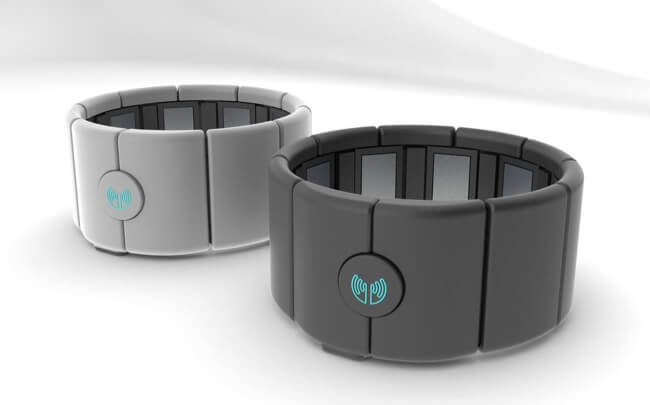
In 2018, North unveiled its first major product under the new brand: Focals, a pair of smart glasses featuring a holographic display. These glasses provided users with information such as messages, weather updates, and navigation directions, all accessible through a discreet retinal display. Focals also integrated with Amazon’s Alexa, allowing voice commands for hands-free operation. To interact with the glasses, users wore a companion device called Loop, a ring that enabled gesture-based control.
In 2025, North continues to innovate in the wearable AR space. The company has expanded its retail presence with flagship stores in Toronto and Brooklyn, providing customers with personalized fittings and demonstrations of their latest products. North’s commitment to enhancing human-computer interaction remains evident as it pushes the boundaries of wearable technology.
How Is Top Hat Transforming Education with Canadian Innovation?
Top Hat continues to revolutionize educator-student interaction through its cloud-based platform that turns smartphones and devices into powerful learning tools. The platform enables professors to embed questions, live polls, quizzes, interactive media, and more directly into lectures, making every classroom moment an opportunity for engagement.

As of May 2024, Time Magazine recognized Top Hat as one of the world’s top 250 EdTech companies, highlighting its impact on higher education. With a user base spanning hundreds of North American universities and colleges, the company supports over 750 institutions and millions of students.
A major leap forward in 2024–25 has been the introduction and enhancement of Ace, an AI-powered teaching assistant that automates the creation of frequent, low-stakes assessments from course materials and offers on-demand student study help. This enables educators to integrate active learning seamlessly and provides personalized support to students.
Top Hat has also expanded its capabilities through targeted acquisitions. In 2025, it acquired Aktiv Learning, a STEM-focused platform used by more than 700 institutions, enabling Top Hat to tailor its offerings to discipline-specific teaching needs in science, technology, engineering, and math.
Financially, Top Hat has secured around CA $234 million in funding as of early 2025, maintaining its position as one of Canada’s best-funded and fastest-growing EdTech startups. The company’s platform, now branded as dynamic AI-enhanced courseware, offers interactive response tools, customizable textbooks, virtual classrooms, secure testing, and extensive analytics-driven insights.
However, user feedback is mixed. Educators appreciate the platform’s engagement and insights, but both faculty and students have cited tech glitches, extra costs per course, and aggressive sales practices, though recent efforts by leadership have aimed to address these issues.
Why Is Article a Furniture Startup Worth Watching?
Vancouver-based Article continues to shake up the furniture world with its direct-to-consumer model, offering stylish, high-quality pieces at lower prices by cutting out traditional retail markups. Founded in 2011, the company has maintained strong performance – reaching profitability in 2015 and generating an estimated US $200-500 million in annual revenue by 2020.

Unlike many venture-backed startups, Article remains primarily founder-funded and profitable, empowering it to expand strategically. It has invested heavily in its supply chain: opening multiple North American fulfillment centres (including Toronto, Houston, Chicago, Vancouver), launching its own delivery fleet under the Article Delivery Team (ADT), and achieving next-day or same-week delivery in key markets.
The brand’s efficient logistics and lean production have allowed it to deliver around 6,000–7,000 furniture pieces per month across the U.S. and Canada. It continues to grow via data-driven strategies, such as launching room bundles to simplify purchases, optimizing conversion funnels, and leveraging robust user-generated content (Article’s Instagram alone has 770,000+ followers).
That said, recent customer feedback is mixed. While many praise Article’s value and service, some reviews mention quality issues, i.e. cushions flattening, fabric pilling, or veneer delamination.
What Problem Does Figure 1 Solve in Healthcare?
Toronto-based Figure 1 tackles a key challenge in modern medicine: the need for real-time, secure collaboration and peer consultation among healthcare professionals. Known as the “Instagram for doctors,” the platform enables clinicians to safely share and discuss complex medical cases – ranging from dermatological conditions to ECGs and trauma injuries – while ensuring patient privacy through built-in anonymization and consent features .

Key Issues Addressed:
Fragmentation in care: Healthcare is often siloed, with limited channels for cross-institutional learning. Figure 1 bridges these gaps by uniting over 2 million professionals globally in a searchable community .
Diagnostic speed & accuracy: Clinicians can post images and receive expert input on uncommon or challenging cases, boosting diagnostic confidence and speeding up decision-making .
Training & education: Through a daily feed of anonymized, real-world cases, Figure 1 reinforces experiential learning and helps clinicians recognize rare conditions through repeated exposure.
Data accessibility & standardization: New AI features, including ECG image digitization and future visual pattern recognition, enable Figure 1 to transform disparate image files into structured, analyzable data.
As of 2025, the platform supports over 2 million healthcare professionals in more than 100 countries and has raised over US $20 million in Series B funding. Figure 1 recently introduced AI-powered case tagging to automatically surface relevant past cases based on visual and textual inputs, and has begun pilot programs with hospital systems to integrate its feed into clinical decision-support workflows—helping flag potential diagnoses in real time.
What Sets Sonder Apart in the Travel Industry?
Montreal-founded Sonder merges the flexibility of short-term rentals with hotel-grade amenities and service. Guests enjoy professionally cleaned, design-forward apartments and suites with 24/7 virtual concierge access, plus self-service check-in via app and digital door locks for a seamless, contactless stay.

In 2025, Sonder sets itself apart in the travel industry through a hybrid hospitality model that delivers a consistent, upscale experience across more than 9,000 units in over 40 global cities. By blending stylish, design-driven apartments with hotel-standard operations, the company provides travelers with a unique mix of comfort and professionalism. This experience is powered by a tech-enabled, mobile-first approach: the Sonder app guides guests from booking and check-in to service requests and digital concierge support, essentially putting a full-service lobby in the palm of their hand.
Sonder has also made significant strides in the business and group travel space. In 2022, the company secured $70 million in group bookings and partnered with HelmsBriscoe to deepen its presence in the corporate travel market. A key strategic move includes its long-term licensing agreement with Marriott, allowing select properties to appear under the “Sonder by Marriott Bonvoy” banner. Full integration into the Marriott Bonvoy ecosystem is expected by the end of 2025, letting guests earn and redeem loyalty points.
On the operational side, Sonder has streamlined its portfolio, exiting approximately 2,800 underperforming leased units by late 2024. This strategic retrenchment, combined with a $146 million capital raise, has strengthened its financial position and allowed for more focused growth. A major part of that expansion includes the development of an international growth centre in Montreal, expected to create 700 jobs by 2025. Backed by a CA$30 million investment from the Quebec government and a US$170 million Series E funding round, the Montreal hub reinforces Sonder’s Canadian roots while supporting its global ambitions.
How Is Ritual Changing the Way People Order Food?
Toronto-based Ritual is revolutionizing food ordering by combining the convenience of skipping lines with a user-friendly, loyalty-centric experience. With order-ahead capabilities, users can place their meals in advance, then walk in and pick up without waiting—streamlining the lunch rush. Its Loyalty+ rewards program lets customers collect stamps at participating restaurants, accumulate points, and redeem them as credits, strengthening repeat business while providing personalized offers such as boosters and push notifications.

To address one of the industry’s thorniest issues – hidden markups – Ritual launched MenuIQ in January 2024. This innovative feature uses AI to compare prices across ordering platforms, letting users see exactly how much they’re overpaying on apps like Uber Eats and DoorDash and choose the fairest option.
On the business front, Ritual has secured over US $55 million in Series B funding, fueling a robust North American expansion. Corporate clients and residential buildings now enjoy custom integrations under “Ritual for Companies” and “Ritual for Buildings,” with major employers using the app for team lunches, often piggybacking orders to save time .
However, as Ritual evolves, some users have raised concerns. Fees now apply to orders, and many restaurants inflate prices, undermining the promise of “in store pricing.” Additionally, reliability issues, such as orders delayed or ignored, have surfaced in feedback forums.
What Is Element AI’s Role in Shaping Canada’s AI Leadership?
Toronto-founded Element AI played a pivotal role in solidifying Canada’s reputation as an AI powerhouse. Founded in 2016 by leading figures like Jean François Gagné and Turing Award–winner Yoshua Bengio, the company was among the first to commercialize homegrown AI research with a mission to deliver AI-as-a-service solutions across sectors such as finance, logistics, and healthcare. Its early prominence was fueled by a record-setting US $137.5 million Series A and a subsequent $200 million round, investments that enabled the hiring of 500 AI experts and helped establish Montreal as a global AI hotspot.

However, Element AI struggled to convert R&D breakthroughs into widely adopted commercial products, a common hurdle in deep-tech ventures. By late 2019, costly operations and limited revenue led to difficult restructuring and layoffs. Ultimately, ServiceNow acquired Element AI in November 2020 for roughly US $230 million – which is a fraction of its peak valuation – with the goal of integrating its technical talent and AI know-how into ServiceNow’s workflow platform .
That acquisition led to the establishment of a ServiceNow AI Innovation Hub in Canada, officially launched early in 2021. This move reaffirmed Canada’s strategic position in global AI development and preserved Montreal’s role as an innovation centre – a place for practical, enterprise-focused AI advancement. Beyond its direct technologies, Element AI also shaped Canada’s AI ecosystem by fostering public-private partnerships, advocating for ethical AI standards, notably the Toronto Declaration, and inspiring numerous spin-offs and startups staffed by its alumnae.
How Is Kindred Using AI and Robotics to Revolutionize Warehousing?
Toronto-born Kindred is transforming warehousing by seamlessly integrating AI and robotics through its SORT system, which combines AI-powered machine vision and robotic arms to autonomously pick, sort, and pack items in dynamic warehouse environments. Using its proprietary AutoGrasp™ platform and reinforcement learning-based “human-in-the-loop” improvement model, Kindred’s robots have surpassed 100 million lifetime picks, with throughput increasing 50% quarter-over-quarter in 2020 and a record 10 million picks during the 2019 holiday season. Deployment across North American warehouses – by retailers like Gap Inc. and American Eagle – has demonstrated gains in productivity, pick accuracy (99.5%+), and worker safety through social distancing measures.

By adopting a Robots-as-a-Service (RaaS) model, Kindred enables cost-efficient scalability: clients pay per pick rather than investing in capital-heavy robotic infrastructure. This approach has supported pilots and rollouts with major warehouse integrators such as Hy-Tek and VARGO, and facilitated flexible deployments tailored to retailers’ needs. A $35.4 million Series B led by Tencent in 2021 has fueled the expansion of these partnerships and broader market deployment.
As of 2025, Kindred continues pushing the frontier of AI robotics in logistics. Under the umbrella of Ocado Group, Kindred is extending its AutoGrasp™ capabilities to new item categories and geographies, reinforcing its mission to augment human workers and address e-commerce and labor challenges in modern supply chains.
How Does Sensibill Simplify Receipt Management?
Toronto-based Sensibill has transformed receipt management by embedding its AI-powered digital receipt platform directly into banking apps, enabling users to automatically capture paper and e-receipts without switching apps.

Since raising US $17 million in its Series A, followed by a CAD $41 million Series B led by Radical Ventures, Sensibill expanded globally, integrating with over 30 banks across Canada, the U.K., U.S., and Australia and reaching an estimated 60 million users. Its ability to extract structured SKU-level data from unstructured receipts empowers banks with deep spend insights, while offering users features like warranty reminders, expense tracking, and personalized money tips.
In October 2022, Sensibill was acquired by U.S. fintech provider Q2, becoming part of its digital banking suite to enhance financial institutions’ capability to derive actionable intelligence from transaction data. As of 2025, Sensibill continues to evolve under Q2’s umbrella, scaling its tools for both consumers and small/medium-sized enterprises (SMEs), with capabilities now powering banking partners like Progress Bank to streamline expense management and automate receipt reconciliation.
What Is Deep Genomics Doing with AI in Biotechnology?
Toronto’s Deep Genomics is merging AI and RNA biology to accelerate the development of precision therapies for rare genetic diseases. At its core is BigRNA, an AI “foundation model” capable of predicting how genetic mutations affect RNA expression, protein binding sites, and splicing across different tissues, uniquely enabling the design of precise RNA-based therapeutics such as steric-blocking oligonucleotides (SBOs).

Its proprietary AI Workbench – now in its third generation – scans hundreds of thousands of pathogenic genetic variants, automatically pinpointing druggable targets. In under two hours, the system can uncover promising candidates; approximately 50% lead to lab-validated therapeutic candidates within a year. A flagship success is DG12P1, designed to treat Wilson disease by correcting RNA splicing errors, a milestone achieved in just 18 months from target discovery.
Deep Genomics also collaborates with pharmaceutical partners: in a key 2024 agreement, BioMarin tapped its AI Workbench to uncover oligonucleotide candidates for four rare disease programs. These collaborations showcase the platform’s ability to scale from discovery to therapeutic development.
To support this growth, Deep Genomics recently expanded with new labs in Cambridge, MA, and added key leadership, appointing experts to further BiRNA and drug pipeline innovations. The company raised a record-setting US $180 million in Series C funding (2021) – one of Canada’s largest biotech rounds – to mature its AI drug discovery platform.
Is Lets Nurture the Right Tech Partner for High Growth Startups in Canada?
As Canada’s startup ecosystem continues to expand, companies like Lets Nurture are playing a pivotal role in accelerating the growth of early-stage ventures.
By offering tailored services in AI development, mobile app creation, and immersive VR/AR experiences, Lets Nurture helps startups bring their ideas to life faster and more effectively.
Whether it’s building a scalable mobile platform, integrating machine learning models, or crafting virtual environments for customer engagement, their expertise enables Canadian startups to stay competitive in rapidly evolving markets.
For entrepreneurs navigating the challenges of launching and scaling a tech-driven business, partnering with a versatile digital solutions provider can make all the difference. Lets Nurture’s support allows high growth startups and emerging Canadian companies to focus on their core vision while accessing the technical horsepower needed to innovate.
Additionally, having a strong digital presence through Canadian startup web design is essential for building credibility, improving user experience, and driving conversions in competitive global markets.
With the right guidance and development support, Canada’s next wave of unicorn startups is well-positioned to make a global impact, fueled by forward-thinking partners like Lets Nurture.
Contact us today to learn more information about how we can help your startup business.

Author

Posted by Lets Nurture
Our Partners
Approved Solution Provider

Proud Member

Approved Consultant

Proud Member