

how-to-choose-the-right-ai-integration-services-company

How to Choose the Right AI Integration Services Company

08 May. 26
8 VIEWS

AI Integration services help businesses automate workflows, connect systems, and improve decision-making. Choosing the right AI integration company can save time, reduce costs, and support long-term business growth.

According to recent industry reports, nearly 78% of organizations worldwide now use AI in some part of their operations, compared to 55% the previous year. Businesses using AI are also reporting major productivity improvements and faster decision-making.

At the same time, many companies still struggle with implementation. Research shows that a large percentage of AI projects fail because businesses choose the wrong strategy, lack proper integration planning, or work with inexperienced providers.

This guide will help you understand how to choose the right AI integration services company, what red flags to avoid, and what really matters when investing in AI-powered business solutions.

Why Businesses Are Investing in AI Integration Services

Most businesses already use multiple tools every day. CRM systems, ERP software, customer support platforms, marketing tools, analytics dashboards, inventory systems, and cloud applications all need to work together smoothly.

The problem is that many of these systems operate separately.

Teams waste hours switching between platforms, manually updating information, and managing repetitive tasks. This slows down productivity and creates operational bottlenecks.

That is where AI automation services and AI software integration become valuable.

A trusted AI integration company helps businesses connect AI technologies with existing systems to create faster, smarter workflows. Instead of replacing your current setup completely, the goal is to improve how your tools communicate and automate work.

For example, businesses now use AI integration services to:

  • Automate customer support with AI chatbots
  • Improve sales forecasting using AI-powered analytics
  • Connect CRM platforms with AI recommendation systems
  • Build AI workflow automation for repetitive tasks
  • Improve reporting with predictive analytics integration
  • Enable real-time decision-making through AI business intelligence solutions

According to McKinsey’s 2025 AI survey, companies that scale AI successfully often focus on improving efficiency, innovation, and customer experience together instead of treating AI as a standalone tool.

That shift is why enterprise AI integration is becoming a major business priority.

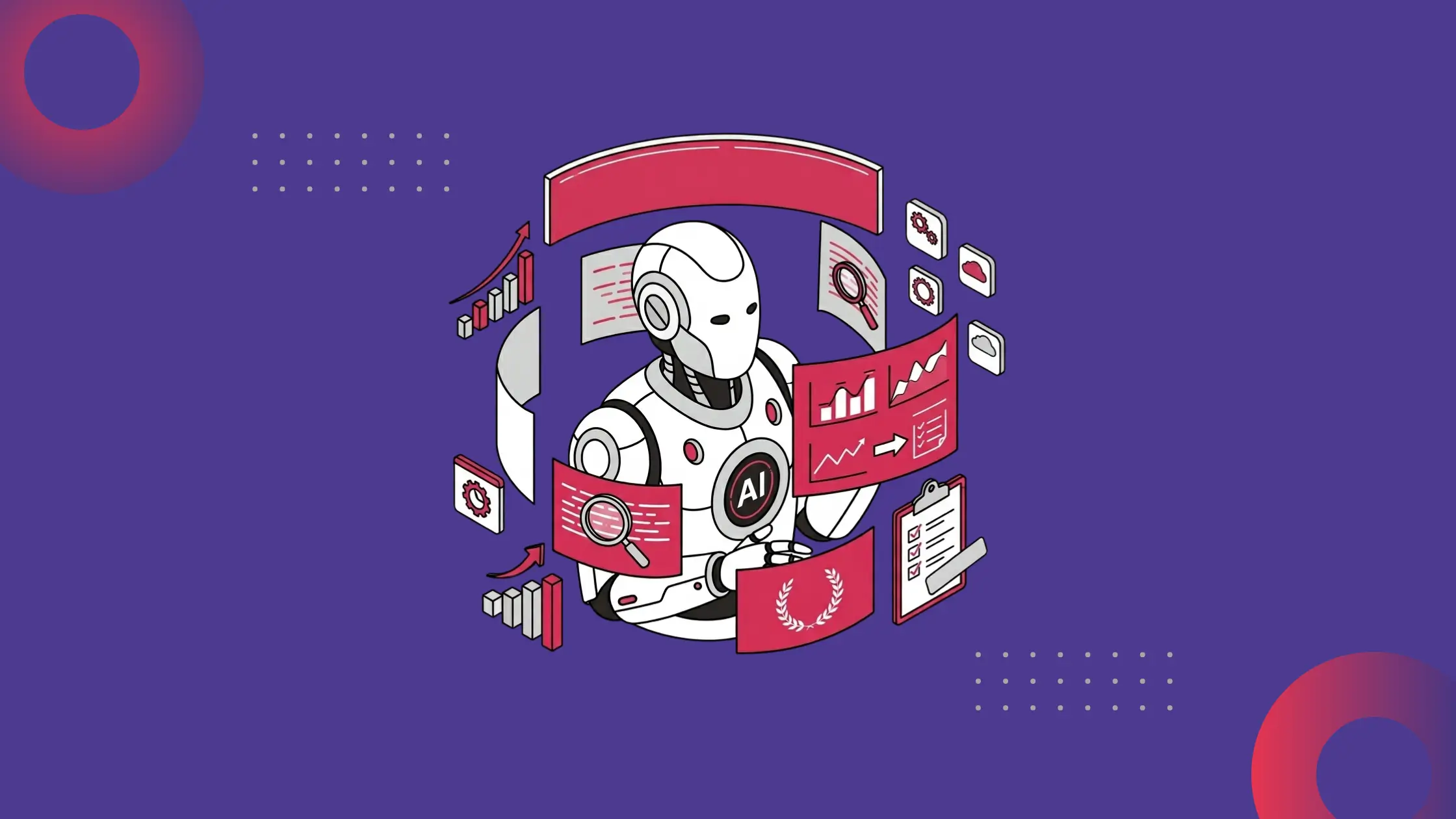
AI business intelligence dashboard showing digital marketing analytics and growth
Image by DC Studio on Freepik

What Does an AI Integration Services Company Actually Do?

Many businesses assume AI development and AI integration are the same thing. They are not.

An AI development company usually creates AI models, applications, or custom software. An AI integration services provider focuses on connecting those AI tools with your existing systems and workflows.

Think of it this way.

Building an AI tool is only one part of the process. Making it work properly inside your business operations is the real challenge.

A professional AI integration company may help businesses with:

  • AI API integration
  • AI application integration
  • CRM AI integration
  • ERP AI integration
  • Machine learning integration
  • NLP integration services
  • AI cloud integration
  • Chatbot integration services
  • Data-driven automation
  • Predictive analytics integration

The right AI integration provider ensures your systems work together smoothly, securely, and efficiently.

Why Many AI Projects Fail

Businesses often hear success stories about AI-powered growth, automation, and cost savings. But the reality is that many AI projects struggle because companies focus too much on technology and not enough on integration planning.

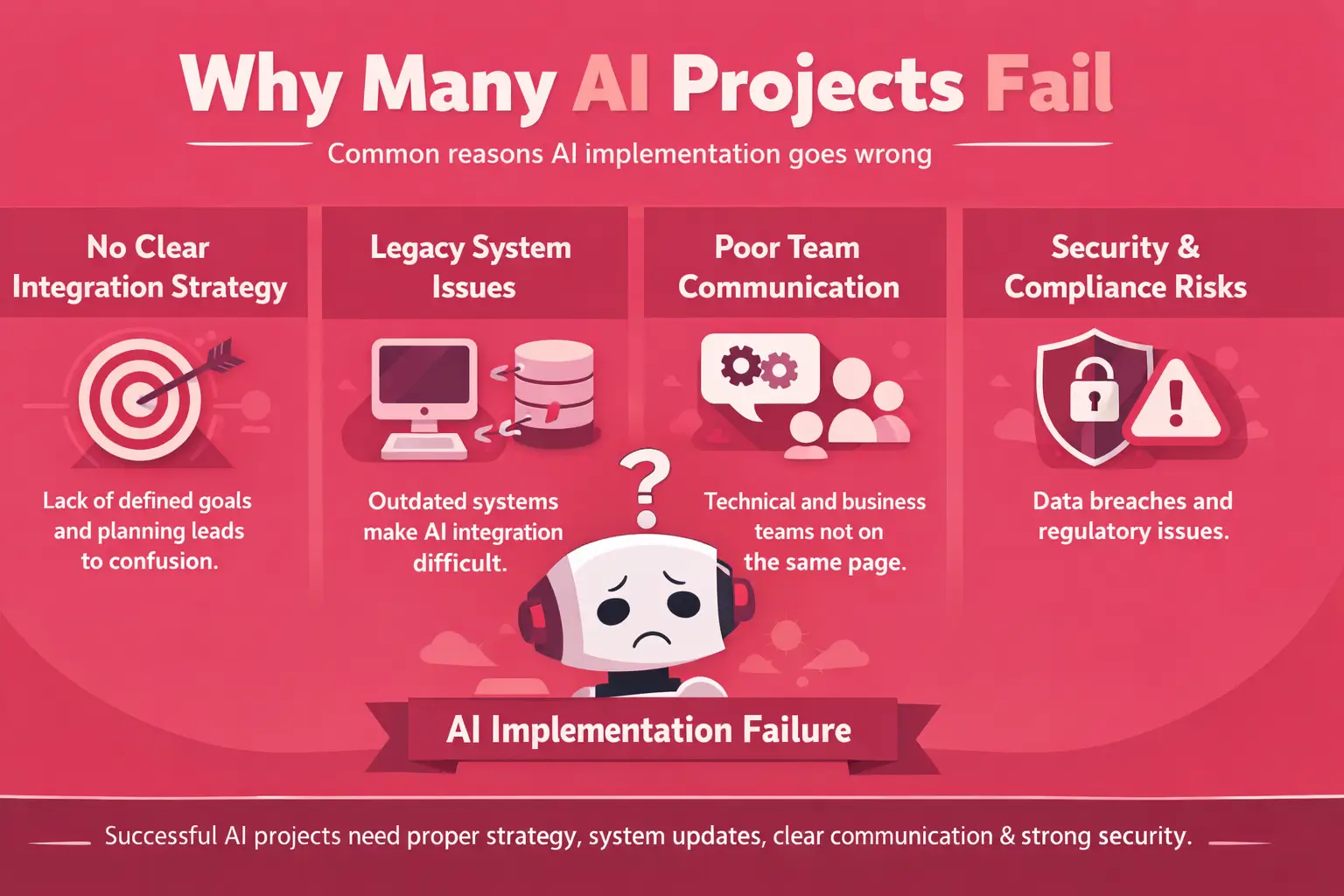
Here are some of the biggest reasons AI implementation fails.

1. No Clear AI Integration Strategy

Some companies invest in AI tools simply because competitors are doing it. They adopt software without defining clear goals, workflows, or business outcomes.

Without a proper AI integration strategy, even powerful AI tools can create confusion instead of efficiency.

Experienced AI integration consulting companies help businesses identify where AI actually creates value before implementation begins.

2. Legacy Systems Create Integration Problems

Older software systems are one of the biggest obstacles in AI technology integration.

Many businesses still rely on outdated ERP systems, custom software, or disconnected databases that were never designed for AI compatibility.

This is especially common in manufacturing, healthcare, logistics, and finance industries.

Businesses searching for AI integration services for legacy systems should prioritize providers with strong experience in custom AI integration services and system modernization.

3. Poor Communication Between Teams

Technical expertise alone is not enough.

Some AI integration experts speak only in technical language, making it difficult for business teams to understand timelines, challenges, or project expectations.

The best AI integration partner explains complex ideas clearly and keeps communication simple throughout the project.

That matters more than most businesses realize.

4. Security and Compliance Risks

Security becomes even more important when AI systems process customer information, financial records, healthcare data, or internal business intelligence.

Poor AI implementation services can expose businesses to compliance risks and cybersecurity issues.

This is why businesses looking for AI integration services for healthcare industry projects or finance-related automation should always evaluate security practices before hiring a provider.

Business professionals discussing AI integration strategy and implementation challenges


How to Choose the Right AI Integration Services Company

Finding the best AI integration services company requires more than comparing prices or reviewing websites.

Businesses need to evaluate long-term compatibility, technical expertise, communication quality, scalability, and business understanding.

Here is what actually matters.

1. Check Their Technical Expertise

Not every AI integration agency has experience with the same technologies or industries.

A reliable AI integration company should understand:

  • AI workflow automation
  • AI-powered business solutions
  • AI API integration
  • Intelligent automation solutions
  • Generative AI integration
  • AI cloud integration
  • Machine learning integration
  • Predictive analytics integration
  • AI software consulting

They should also understand software architecture, cybersecurity, cloud infrastructure, and API connectivity.

Businesses often overlook this step and later discover that the provider cannot scale the solution properly.

2. Look for Industry Experience

Industry experience matters more than many businesses think.

Healthcare companies have different requirements than eCommerce brands. SaaS platforms need different AI integration support services compared to manufacturing businesses.

For example:

  • Healthcare companies focus heavily on compliance and data privacy
  • eCommerce brands prioritize customer personalization and AI chatbots
  • SaaS businesses need scalable API integration
  • Logistics companies focus on automation and forecasting

If you are searching for AI integration consulting for SaaS companies or AI integration services for eCommerce businesses, ask for real project examples from similar industries.

A provider that understands your industry challenges can reduce risks significantly.

3. Review Their Integration Process

A structured process is one of the clearest signs of a professional AI integration provider.

Most successful AI integration projects follow these stages:

4. Discovery and Business Analysis

The provider studies your workflows, existing systems, pain points, and goals.

5. AI Integration Planning

The team creates a roadmap for AI application integration and automation.

6. Development and System Integration

AI systems are connected with existing platforms, APIs, databases, and workflows.

7. Testing and Optimization

The solution is tested for performance, compatibility, security, and scalability.

8. Ongoing AI Integration Support Services

Long-term support helps businesses maintain and improve automation as operations grow.

Without ongoing support, many businesses struggle to maintain AI systems effectively.

Important Questions to Ask Before Hiring an AI Integration Company

Before signing any agreement, ask direct questions.

Have You Worked With Businesses Like Ours?

An experienced enterprise AI integration services company should provide relevant case studies and examples.

Can You Integrate AI With Our Existing Systems?

This is critical for businesses using older software or multiple platforms.

Do You Offer Custom AI Integration Services?

Every business has unique workflows. Avoid companies that only offer generic solutions.

How Do You Handle Security and Compliance?

Ask about encryption, access control, compliance standards, and cloud security practices.

What Happens After Deployment?

Reliable AI integration support services are essential for scaling and long-term optimization.

rning signs appear early during discussions.

Pay attention to them.

1. Unrealis

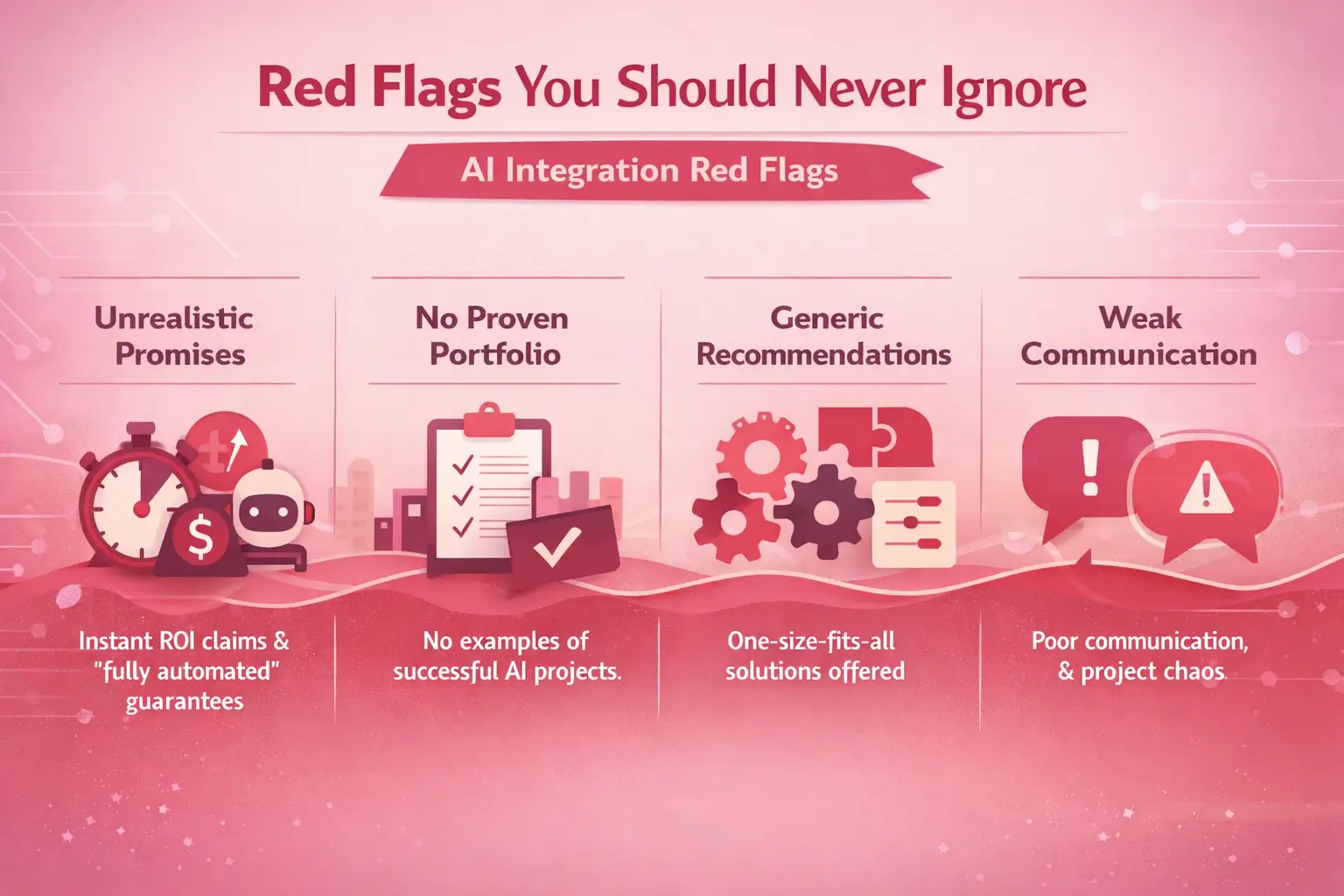
Red Flags You Should Never Ignore

Some watic Promises:

Avoid providers claiming instant ROI or fully automated operations without challenges.

AI-driven business transformation takes planning, testing, and ongoing improvements.

2. No Proven Portfolio:

Professional AI integration experts should provide real examples of successful projects.

3. Generic Recommendations:

Businesses need tailored AI integration solutions, not one-size-fits-all automation.

4. Weak Communication:

Poor communication often leads to project delays, budget issues, and failed expectations.

Identifying red flags when hiring an AI integration services company

Why Custom AI Integration Services Deliver Better Results

Off-the-shelf AI tools can work for basic tasks. But growing businesses usually need more flexibility.

Custom AI integration services for businesses help organizations create workflows designed around their operations instead of forcing teams to adapt to generic software.

Custom solutions often provide:

  • Better scalability
  • Improved automation accuracy
  • Faster workflows
  • Better reporting and analytics
  • Stronger customer experiences
  • Easier integration with existing systems

This is especially important for businesses focused on AI-enabled digital transformation and long-term operational growth.

How Much Do AI Integration Services Cost?

One of the most common business questions is: how much do AI integration services cost?

The answer depends on several factors.

Pricing is usually influenced by:

  • Existing infrastructure complexity
  • Number of software integrations
  • AI customization requirements
  • Security and compliance needs
  • API development requirements
  • Ongoing maintenance and support

Affordable AI integration services for startups may involve chatbot automation or workflow improvements, while enterprise AI integration projects often require advanced customization and large-scale infrastructure support.

The cheapest option is rarely the best long-term investment.

Businesses should focus on ROI, scalability, and operational impact instead of only comparing pricing.

AI Integration Trends Businesses Should Watch

AI adoption is evolving quickly, and businesses choosing an AI integration company for digital transformation should understand where the market is heading.

1) Generative AI Integration

Businesses are integrating AI assistants, automated content systems, and conversational AI into daily workflows.

2) AI Workflow Automation

Companies are reducing manual work through intelligent automation solutions.

3) AI-Powered Analytics

Businesses now use predictive analytics integration and AI business intelligence solutions for forecasting and operational planning.

4) AI Cloud Integration

Cloud-based AI systems improve scalability, collaboration, and accessibility across departments.

5) AI Adoption Is Accelerating Globally

According to Federal Reserve research, AI adoption across businesses continues to rise rapidly, especially among firms investing in long-term operational efficiency and automation.

Another report found that Indian businesses are seeing some of the highest ROI from generative AI adoption globally, particularly in productivity and operational efficiency improvements.

These trends show that AI is moving from experimentation to practical business implementation.

Future trends in enterprise AI integration and workflow automation

Conclusion:

To choose the right AI Integration services company, businesses should evaluate technical expertise, industry experience, security practices, communication quality, scalability, and ongoing support. The best AI integration partner understands your business goals, integrates AI with existing systems, and delivers custom solutions that improve efficiency, automation, and long-term growth.

Contact us

Choosing the right partner for AI Integration services can help your business improve efficiency, automate workflows, and scale with confidence. Let’s Nurture helps startups, SMBs, and enterprises build secure, scalable, and customized AI integration solutions tailored to real business challenges and long-term growth goals.

Get in touch